Acoustic Performance
Acoustic Ratings Explained — Rw, dB & Speech Privacy
Understanding acoustic performance ratings is essential when specifying movable acoustic walls and operable partitions. This guide explains the key metrics used in the industry, covering sound insulation, speech privacy, meeting room acoustics and classroom acoustics.
What is Sound Insulation?
Sound insulation describes the ability of a building element — such as a movable acoustic wall or operable partition — to reduce the transmission of airborne sound from one space to another. The higher the sound insulation value, the less sound passes through the partition. For movable walls, sound insulation is the primary performance parameter used in specification.
What is Rw? — The Primary Acoustic Rating
Rw (Weighted Sound Reduction Index) is the single-figure laboratory rating used to describe the airborne sound insulation of a building element. It is measured in decibels (dB) and determined by laboratory testing to ISO 140-3 and rated in accordance with ISO 717-1. For movable acoustic walls and operable partitions, Rw is the standard specification metric. The ModernGlide MG100 achieves Rw ratings from 33 dB up to 59 dB depending on panel specification.
Acoustic Ratings for Meeting Rooms
For corporate meeting rooms and small conference rooms, an Rw of 40–45 dB typically provides adequate acoustic separation for general conversation privacy. For meeting rooms where confidential discussions take place, 45–50 dB is recommended. High-performance boardrooms and legal or medical consultation rooms may require Rw 50–59 dB to ensure complete speech privacy. The ModernGlide MG200 and MG100 systems are commonly specified for these applications.
Acoustic Ratings for Classroom Acoustics
UK schools are governed by BB93 (Building Bulletin 93), which sets out acoustic performance requirements for educational buildings. For classrooms separated by a movable acoustic wall, an Rw of 45–52 dB is typically required to meet BB93 requirements. This ensures that teaching in one classroom does not disturb an adjacent class. The ModernGlide MG100 and MG200 systems are widely specified in primary and secondary schools across the UK to meet these requirements.
How Acoustic Seals Influence Performance
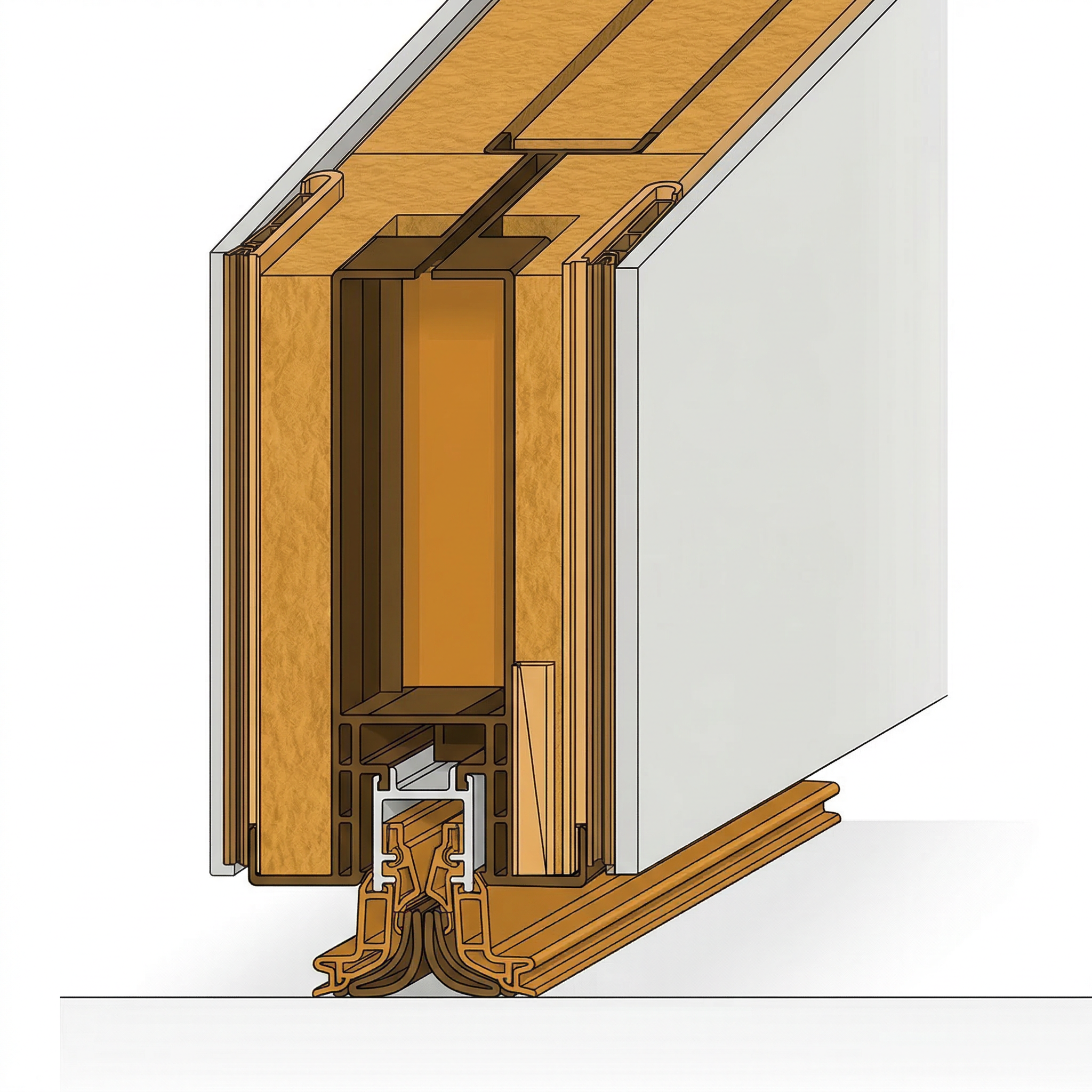
Acoustic seals are critical to the overall performance of a movable acoustic wall system. Even a high-rated panel will underperform if the seals do not close correctly. Modern operable wall systems use automatic drop seals at the floor, perimeter seals at the head and jamb, and astragal seals between adjacent panels. All seals must engage correctly when the wall is deployed to achieve the rated Rw performance. ModernGlide installs all systems using FIS-accredited operatives to ensure rated performance is achieved on site.
How Panel Construction Influences Performance
The construction of the movable wall panel directly affects its acoustic performance. High-performance panels typically use multiple layers including a dense acoustic core, mass-loaded vinyl, decoupled facing panels and perimeter acoustic gaskets. Thicker, heavier panels generally achieve higher Rw ratings. The ModernGlide MG100 panel is available in multiple specifications to achieve Rw ratings from 33 dB to 59 dB.
How Installation Influences Performance
Correct installation is essential to achieving the specified acoustic performance. Flanking transmission — sound travelling around the partition through the structure — can significantly reduce effective acoustic performance if the installation is not carried out correctly. ModernGlide provides full installation guidance and installs all systems using trained, FIS-accredited operatives to ensure that rated performance is achieved in practice.
Related Topics
Technical Support
Need Specification Advice?
Contact our technical team for project-specific guidance, NBS clauses, acoustic performance data and CAD drawings.
Contact Technical TeamRelated Products
Related Resources