System Types
Operable Wall Systems Explained — Types, Components & Uses
Movable acoustic walls and operable partitions are full-height wall systems that can be opened and closed to divide or combine spaces instantly. This guide explains how these systems work, covering panel systems, track systems, acoustic seals and stacking arrangements.
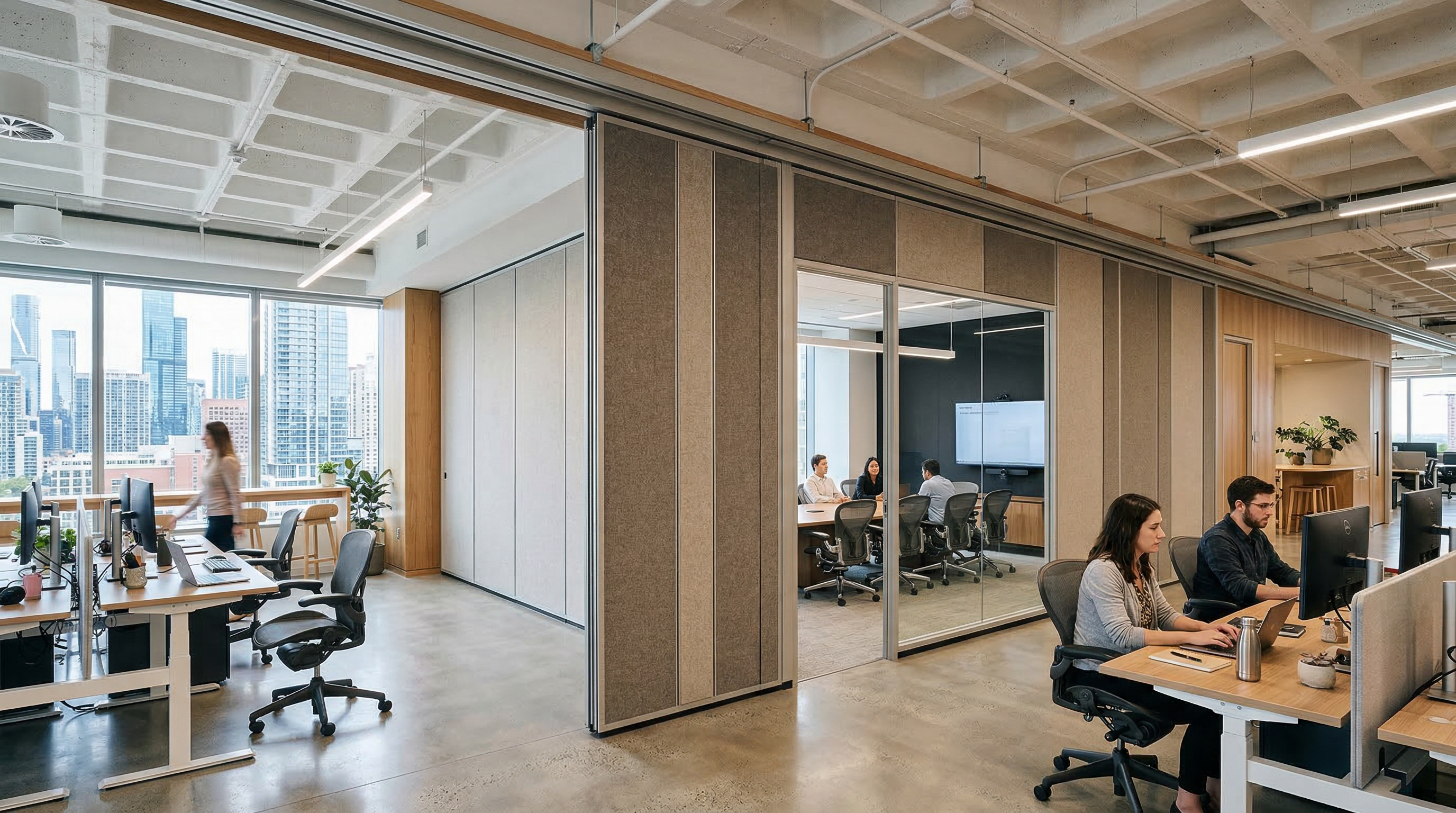
What is an Operable Wall?
An operable wall — also called a movable wall, movable acoustic wall or demountable partition — is a full-height wall system that can be opened and closed to divide or combine spaces. Unlike fixed partitions, operable walls allow instant reconfiguration of a space without any building work. They are used extensively in offices, schools, universities, conference centres, churches and community buildings.
Panel Systems
Operable wall systems consist of individual panels that travel along an overhead track. Each panel is typically 500–1,200mm wide and can reach heights of up to 6,000mm depending on the system. Panels are available in solid (opaque) or glazed configurations. Solid panels provide maximum acoustic performance, while glazed panels allow natural light to pass between spaces. The ModernGlide MG Series includes both solid (MG100, MG200) and glazed (MG500, MG600, MG700, MG900) systems.
Track Systems
The overhead track system carries the weight of the panels and guides them as they are moved. Top-hung systems suspend all panel weight from the ceiling structure via the track — no floor track is required. This leaves the floor completely clear, allowing continuous floor finishes and unobstructed access. The track must be supported by a structural beam or reinforced ceiling capable of carrying the combined weight of the panels.
Acoustic Seals
Acoustic seals are the most critical component of a high-performance operable wall system. When the wall is deployed, the seals must close all air gaps to achieve the rated acoustic performance. Modern systems use automatic drop seals at the floor (which deploy automatically when the panel reaches its final position), perimeter seals at the head and jamb, and astragal seals between adjacent panels. The quality and correct function of these seals determines whether the system achieves its rated Rw performance.
Stacking Arrangements
When the operable wall is open, the panels stack in a designated area. The most common stacking arrangements are: pocket stacking (panels fold into a wall pocket and disappear from view), end stacking (panels stack at one or both ends of the opening), and parking bay stacking (panels stack in a separate bay adjacent to the opening). The stacking arrangement must be designed into the floor plan at the outset — sufficient space must be allowed for the panels when open.
Pass Doors
Operable wall systems can incorporate integrated pass doors to allow access between spaces without opening the full wall. Pass doors are available in both solid and glazed configurations, as single or double leaf. They are typically used in conference and education applications where access between spaces is required while the wall remains deployed.
Electric Operable Walls
Fully electric operable wall systems, such as the ModernGlide MG100E, allow panels to be moved at the touch of a button. Electric systems are ideal for applications where the wall needs to be opened and closed frequently, or where ease of operation is a priority. The MG100E achieves the same Rw ratings as the manual MG100 system (up to Rw 59 dB) with the added convenience of electric operation.
Related Topics
Technical Support
Need Specification Advice?
Contact our technical team for project-specific guidance, NBS clauses, acoustic performance data and CAD drawings.
Contact Technical TeamRelated Products
Related Resources